
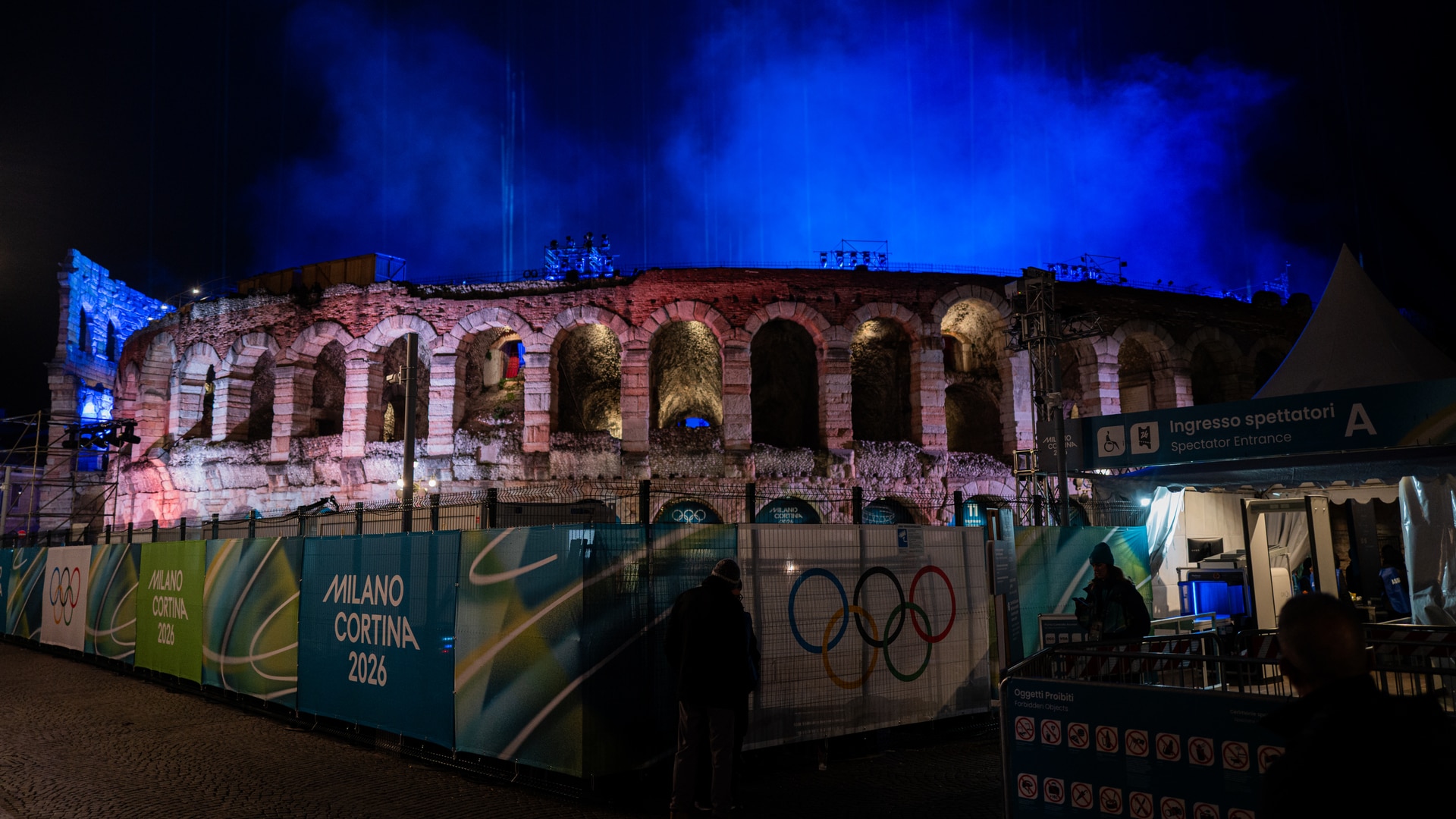
VERONA Italy — The 2026 Winter Olympic Games closed Sunday night inside the Verona Arena, a 2000 year old Roman amphitheater that has stood through empires wars and modern reinvention. Instead of staging the finale in a modern stadium organizers anchored the ceremony in history and paired classical architecture with music light and Italian cultural expression.
The setting made a clear statement. In a Games defined by geographic reach and infrastructure restraint the closing ceremony reinforced Milano Cortina 2026’s focus on continuity over excess.
More than 90 nations entered together in a unified procession reflecting the International Olympic Committee’s modern closing ceremony tradition of dissolving rigid national formations. Athletes who spent two weeks competing stood side by side as officials formally passed the Olympic flag to France host of the 2030 Winter Games.
Team USA’s Presence Across 116 Medal Events

Team USA competed across 116 medal events and remained a consistent contender in figure skating freestyle skiing snowboarding and ice hockey. These disciplines continue to anchor American winter sport success. The broad participation reinforced United States competitive depth across the Winter Olympic program.
For American athletes the ceremony marked transition as much as celebration. It signaled the start of the next four year Olympic preparation cycle.
A Games Defined by Geography
Milano Cortina 2026 became one of the most geographically expansive Winter Olympics in history. Venues stretched from Milan’s urban center to the alpine terrain of Cortina d’Ampezzo and covered roughly 22000 square kilometers across northern Italy.
Organizers relied heavily on existing venues and placed sustainability and infrastructure reuse at the center of planning. That approach reduced large scale new construction and aligned with the International Olympic Committee push for long term viability and cost control.
Local advocacy groups also raised concerns about public spending environmental strain and regional development impact. Like many modern Olympic hosts Italy staged the Games within an ongoing civic debate about economic return and public cost.
The Flame Extinguished
Officials extinguished the Olympic flame and closed Italy’s Winter Olympic chapter for now. France now prepares for 2030 while Italy shifts focus to the upcoming Winter Paralympic Games.
For athletes federations and host cities the Olympic cycle does not pause. It moves forward.
Inside an amphitheater that has witnessed two millennia of human gathering the 2026 Games closed with symbolism and restraint. The ceremony reminded the world that the Olympic movement continues to build on history while shaping its future.




Be First to Comment